

The problem everyone ignores
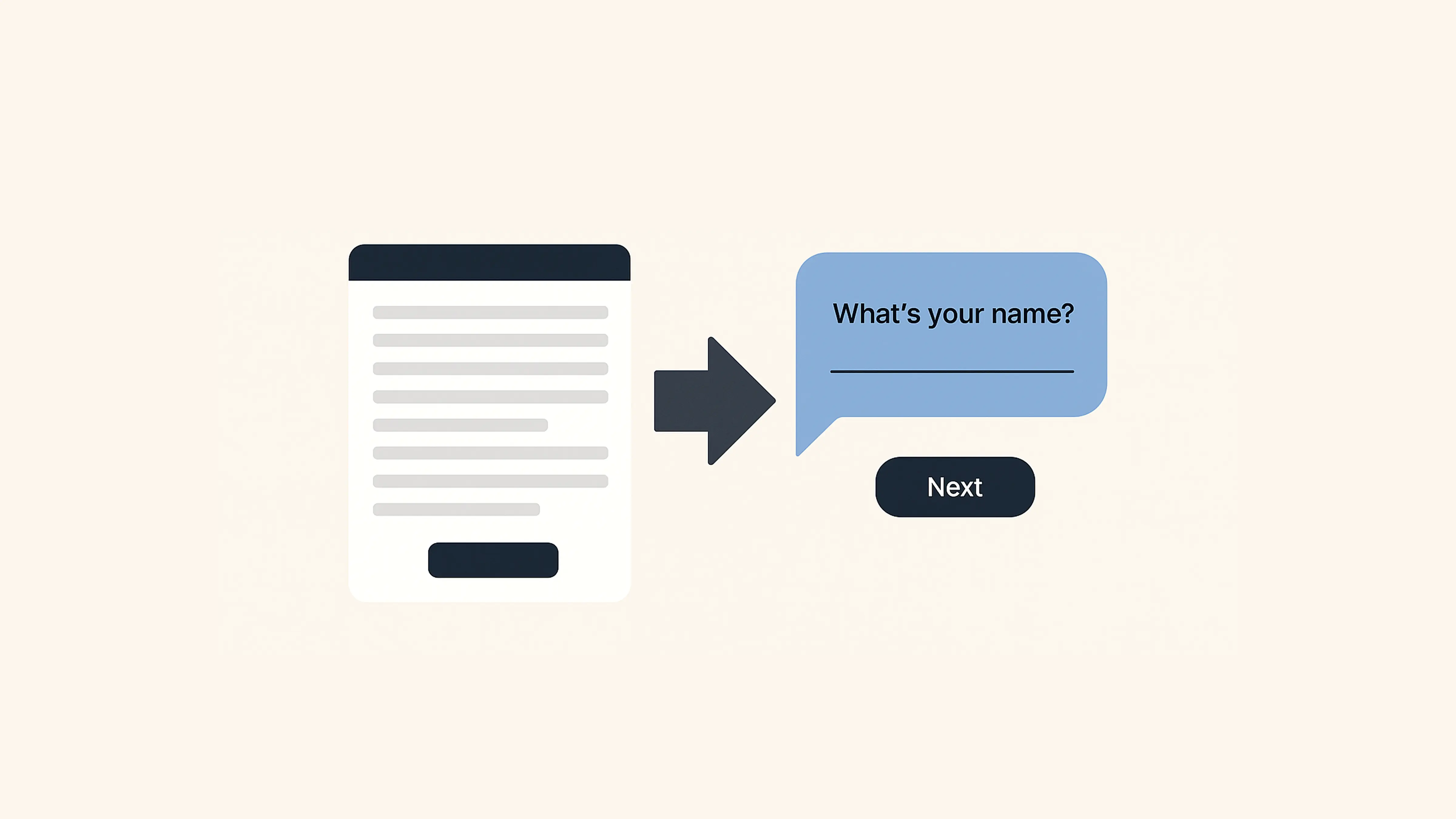
When you open a form with 47 fields stacked on one page, your first instinct is probably to close the tab. That reaction isn’t user error—it’s design failure.
Traditional forms dump everything at once and expect people to figure it out. Conversational forms present one question at a time, creating a natural flow that feels more like dialogue than data entry. This conversational form design approach transforms static documents into interactive experiences that guide users naturally through complex processes.

The difference:
“Please provide your complete employment information, including company name, position, start date, and current salary range”
vs.
“Where do you work?”
user answers
“What’s your role there?”
One overwhelms, the other guides through form conversation.
Why conversational form design actually works
The appeal isn’t just aesthetic—it’s functional. Modern conversational form builders leverage proven UX principles:
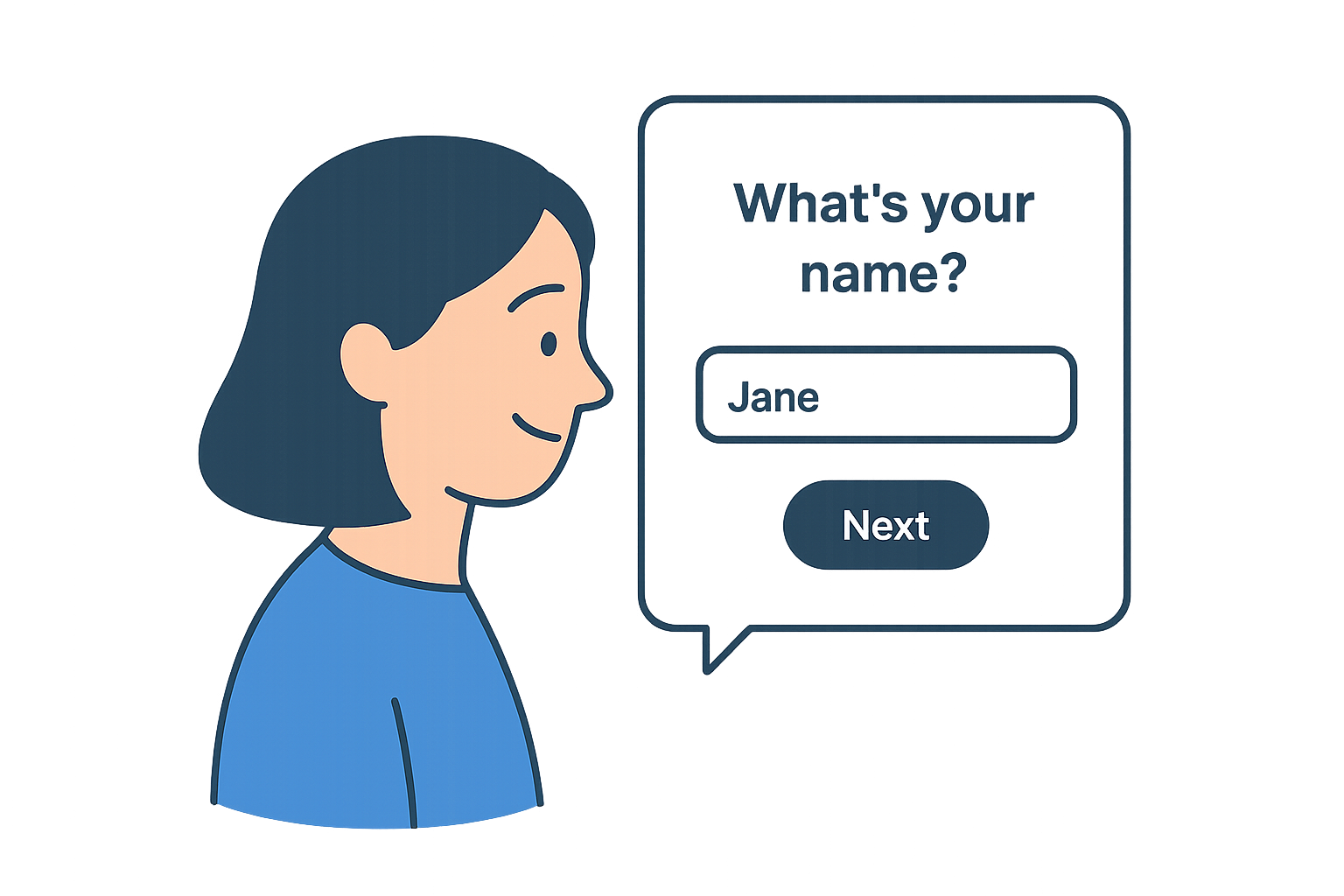
- Single focus: One question eliminates decision paralysis
- Flexible navigation: Users can move forward or back without losing progress
- Smart logic: Skip irrelevant questions automatically
- Reduced friction: Prefilled data means less typing
PlatoForms handles the technical side—themes, responsive design, multi-language support—so the experience feels both smooth and professional.
Real-world conversational form examples
Customer onboarding
Instead of a massive intake form, guide new clients through a conversational form experience:
- “What brings you to us today?”
- “How did you hear about our service?”
- “What’s your primary goal?”
Each answer shapes the next question, creating a personalized path through your conversion form process.
Event registration
Traditional approach: Choose meal preference, dietary restrictions, accessibility needs, t-shirt size all at once.
Conversational form design approach:
- “Will you be joining us for lunch?” → Yes/No
- If Yes: “Any dietary restrictions?” → Text field appears
- If dietary needs: “Anything else we should know?” → Optional details
Job applications
Replace the standard application with conversational forms:
- “What position interests you?”
- Based on selection: Show relevant experience questions
- “Are you authorized to work here?” → If No, explain visa status process
- “When could you start?” → Calendar picker or date range
Medical intake
Healthcare forms are notoriously overwhelming. Conversational form examples in medical settings show dramatic improvements:
- “What’s bringing you in today?”
- “When did this start?”
- “On a scale of 1-10, how would you rate your discomfort?”
- If pain level >5: “Does anything make it better or worse?”
Lead qualification
Sales teams can qualify prospects naturally through form conversation:
- “What’s your company size?”
- If SMB: Focus on cost-effectiveness questions
- If Enterprise: Ask about integration needs and compliance
- “What’s your timeline for making a decision?”
Insurance claims
Turn a stressful process into guided assistance using conversational form design:
- “What type of claim are you filing?”
- Based on type: Show relevant documentation requirements
- “When did this incident occur?”
- “Have you filed a police report?” → If Yes, ask for report number
Design principles for effective conversational forms
-
Start with context: A welcome screen explaining what to expect and how long it takes sets proper expectations for your conversational form experience.
-
Write conversationally: “What’s your email?” works better than “Enter email address in the field below” when creating form conversation.
-
Show progress: Progress indicators help users understand where they are in the conversational form process.
-
Use conditional logic: No point asking about car insurance if they don’t own a car—smart automated forms conversion handles this automatically.
-
Prefill intelligently: If you already have their name, don’t make them type it again in your conversion form.
-
Close the loop: Tell users what happens next—confirmation messages, next steps, timeline.
Advanced conversational form builder techniques
Branch logic in action
Survey example using conversational form design:
- “Do you currently use project management software?”
- If Yes: “Which one?” → Show competitor comparison questions
- If No: “How do you currently track projects?” → Focus on pain points
Multi-step workflows
Contract approval process through conversational experience:
- Legal review → “Any concerns with terms?”
- If concerns: Route to legal team for revision
- If approved: Send to finance for budget approval
- Finance approval → Forward to final signatory
Progressive disclosure
Start simple, add complexity as needed in your conversation form PDF:
- “What’s your budget range?” → Broad categories
- Based on selection: “What’s most important in that range?” → Specific features
- High budget selection: “Would you like to schedule a custom demo?”
The business case for conversational forms
Conversational form examples across industries show measurable improvements:
- Higher completion rates (fewer abandoned conversion forms)
- Better data quality (logical form conversation reduces errors)
- Automated forms conversion streamlines data processing
- Compliance support (HIPAA-ready for regulated industries)
PlatoForms extends this conversational form builder approach beyond web forms to PDFs and multi-step workflows. Sales contracts, HR onboarding, patient intake—all can use the same conversational form design principles.
Implementation tips for your conversational form builder
-
Start small: Pick one high-traffic form and convert it to conversational forms first. Measure the difference.
-
Test the flow: Walk through your conversational form as a first-time user. Where do you get confused or frustrated?
-
Monitor drop-offs: Identify where people abandon the form process. That’s usually where the form conversation breaks down.
-
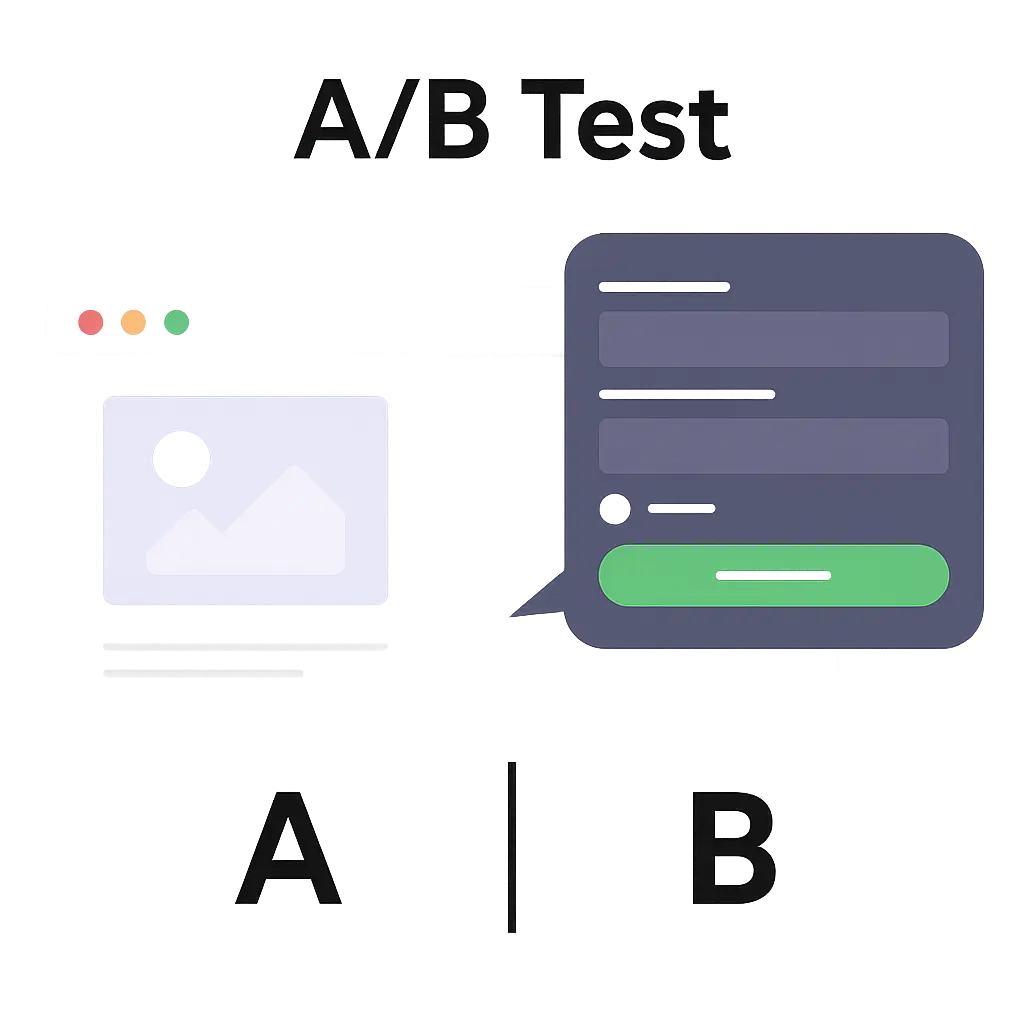
A/B test approaches: Try different question orders or phrasing in your conversational form design to see what resonates with your audience.
Bottom line
Forms are a conversation between you and your users. The question is whether you want that conversation to feel like an interrogation or an actual dialogue.
With conversational design, you respect people’s time and cognitive load while still collecting the data you need. PlatoForms makes this transition simple—same logic, same integrations, better experience.
The technology exists. The only question is whether you’ll use it.