
Create and send pre-filled forms
Tabs
Use a pre-filled form when you already know part of a recipient’s information—for example, a name, customer ID, appointment time, or account number. PlatoForms adds that information to selected fields in an invitation before the recipient opens the form. You can make each pre-filled value editable, read-only, or hidden.
Pre-filling does not change the original form or the values shown to other recipients. Each invitation keeps its own data.
Pre-filled forms are created through Invitations. They are different from a public form link, a field’s default Initial value, and Save for later.
Open the Invitations panel
You can reach Manage Form in either of these ways:
From the Dashboard
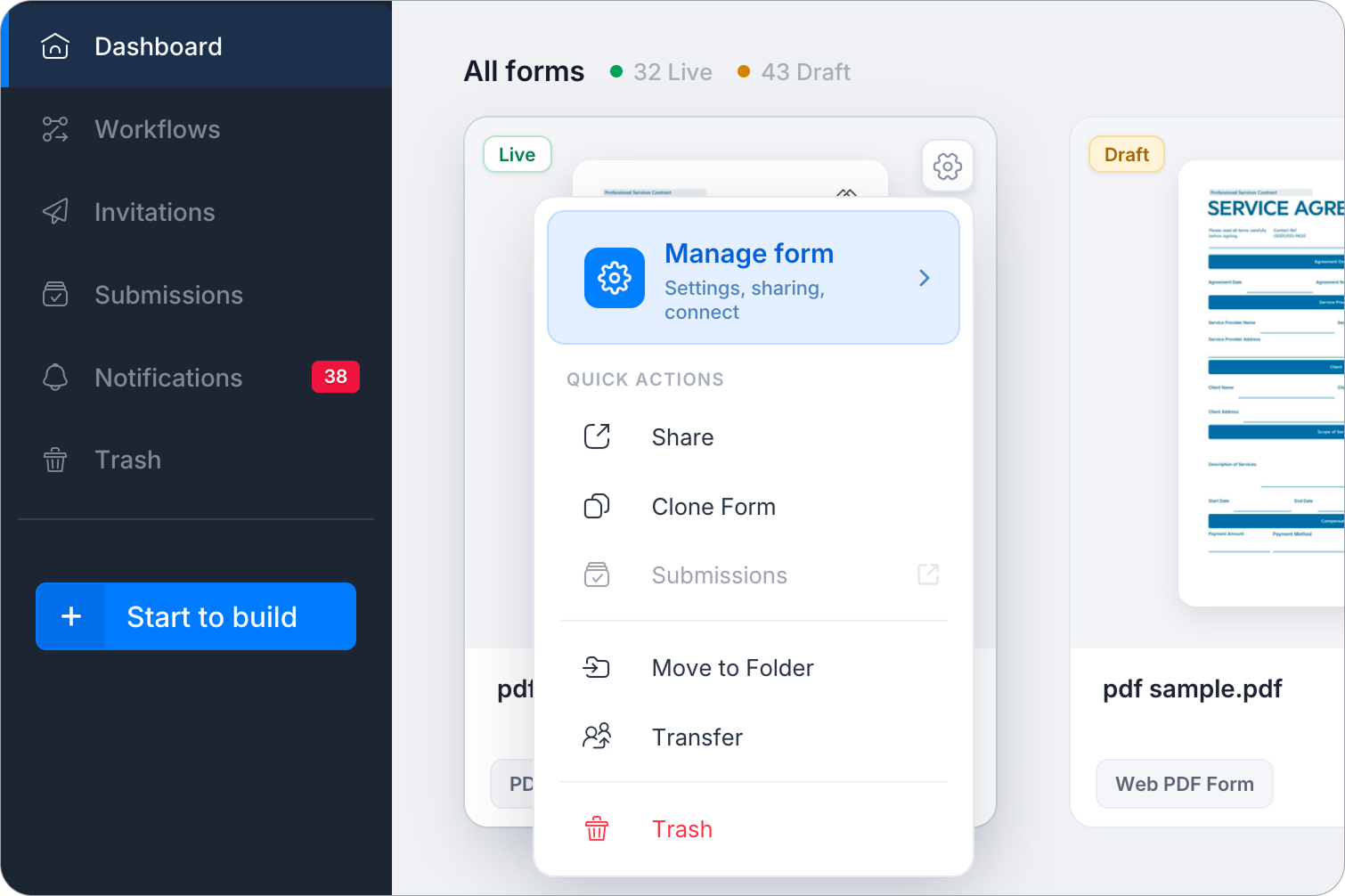
- Find the form you want to pre-fill.
- Select the Settings (gear) icon in the top-right corner of its card.
- Select Manage Form.
From the form editor
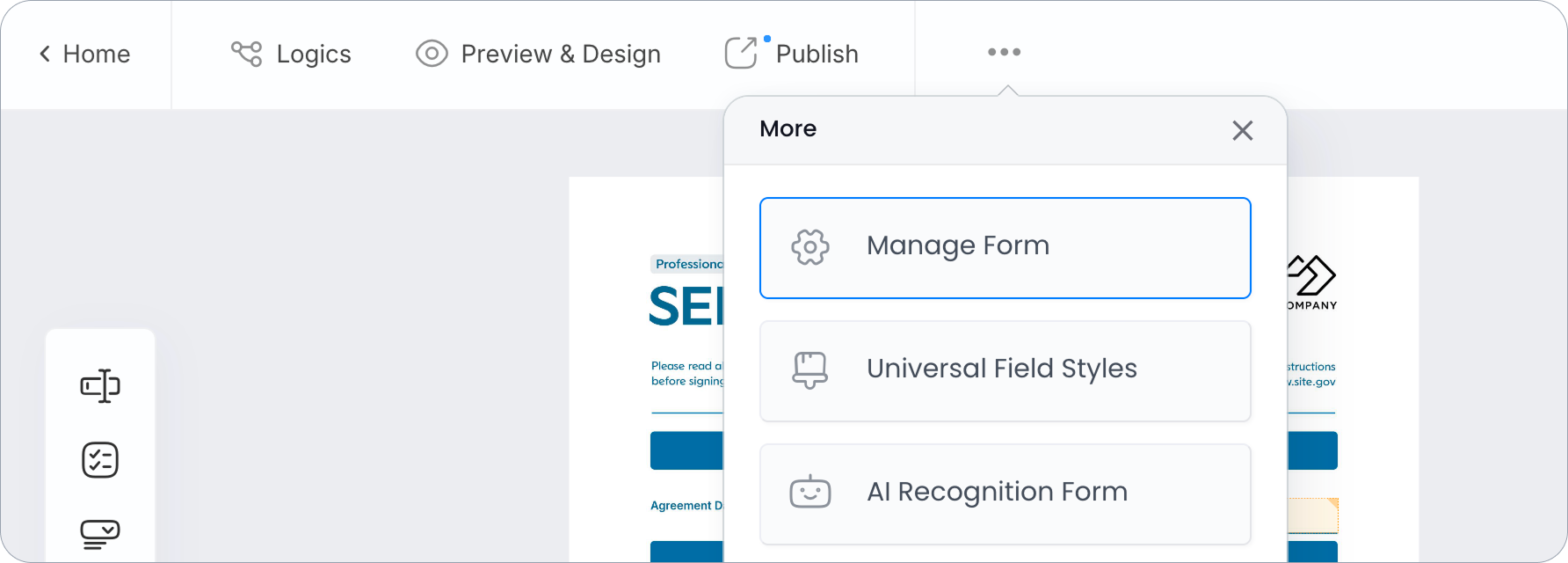
- Open the ••• menu in the top toolbar.
- Select Manage Form.
In Manage Form, select Invitations under Share & access.
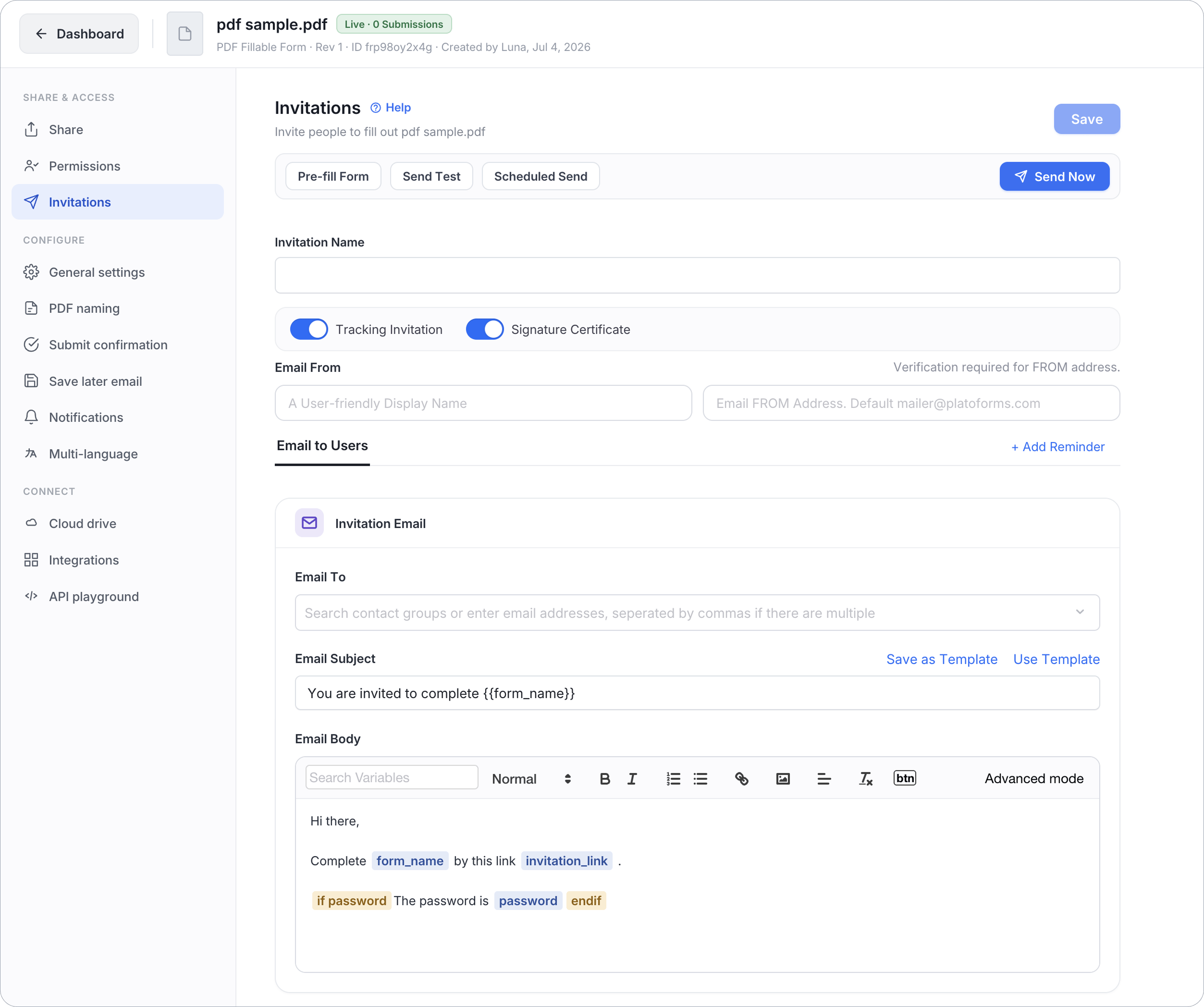
Before selecting Pre-fill Form, enter an Invitation Name. PlatoForms uses this name to identify the invitation; if it is empty, the message Invitation name can not be empty appears.
Choose a pre-fill method
- One invitationEnter known information manually and control whether each value is editable, read-only, or hidden.
- Multiple invitationsUpload a CSV to create personalized invitations for multiple recipients.
Pre-fill one invitation
Use this method when you want to add the same set of pre-filled values to one invitation.
-
In the Invitations panel, configure the invitation you want to send. For details about recipients, email content, and access settings, see Create an invitation.
-
Select Pre-fill Form.

-
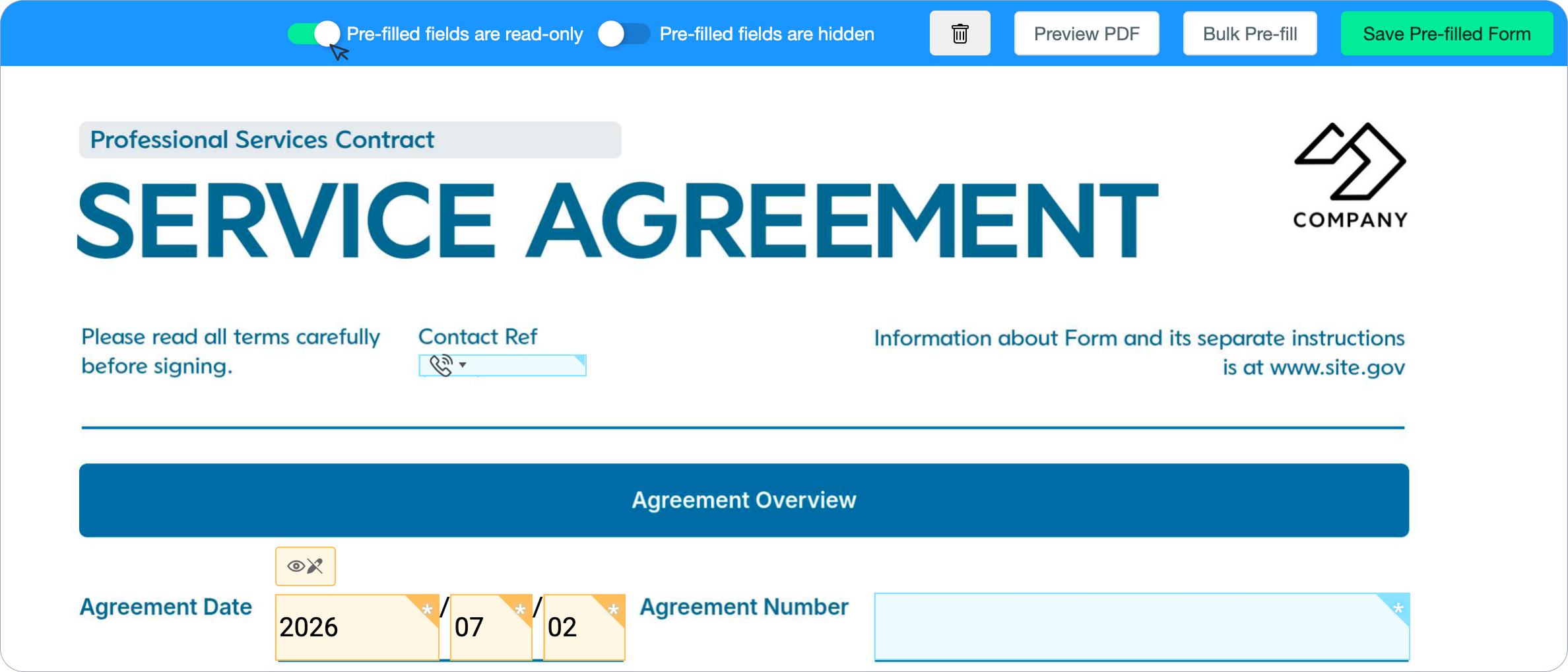
Enter the information you already know. Fields containing pre-filled values are highlighted in yellow.

-
Use the icons beside a pre-filled field to control what the recipient can do:
- Editable: The recipient can see and change the value.
- Read-only: The recipient can see the value but cannot change it.
- Hidden: The value is included but the recipient cannot see it.
-
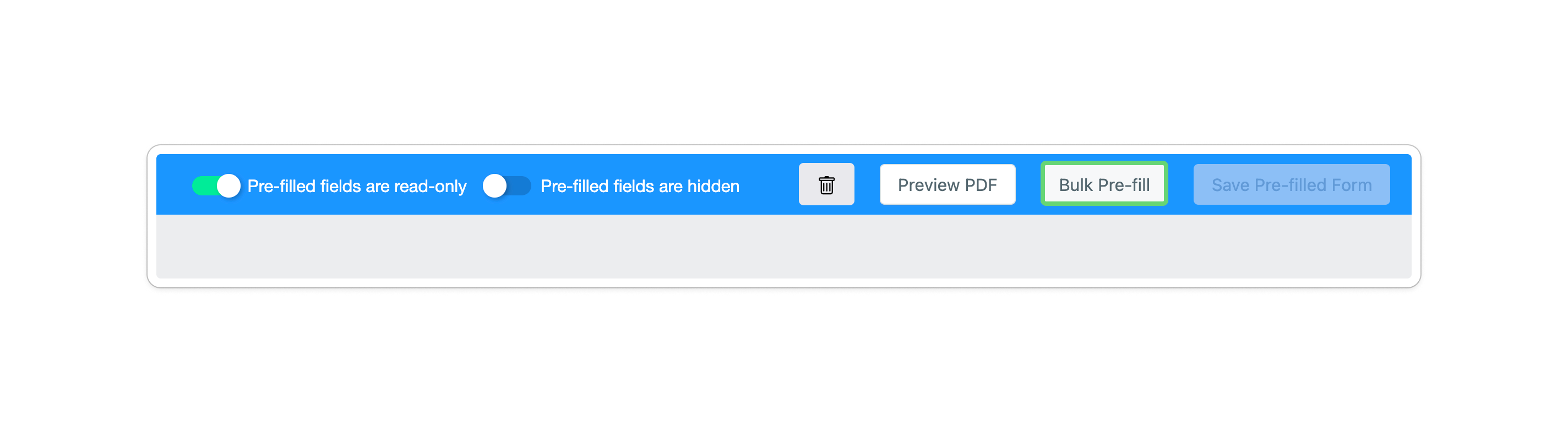
Optional: use the controls at the top to make all pre-filled fields Read-only or Hidden.
-
Review the form, then select Save Pre-filled Form.
To clear all pre-filled values and start again, select the trash icon in the toolbar. This reset cannot be undone.
For a PDF-based form, select Preview PDF to check how the values appear in the resulting document.
Create prefilled invitations from a CSV
Use Bulk Pre-fill when each recipient needs a different set of known values. One CSV upload can create up to 100 invitations.
-
In the Invitations panel, select Pre-fill Form. Before opening the CSV tool, optionally use the toolbar toggles to make all values imported from the CSV Read-only or Hidden. Then select Bulk Pre-fill.
-
Select Download CSV Template. Use this generated file so its column headings match the form’s Field IDs, such as
fid2 - Contact Reference.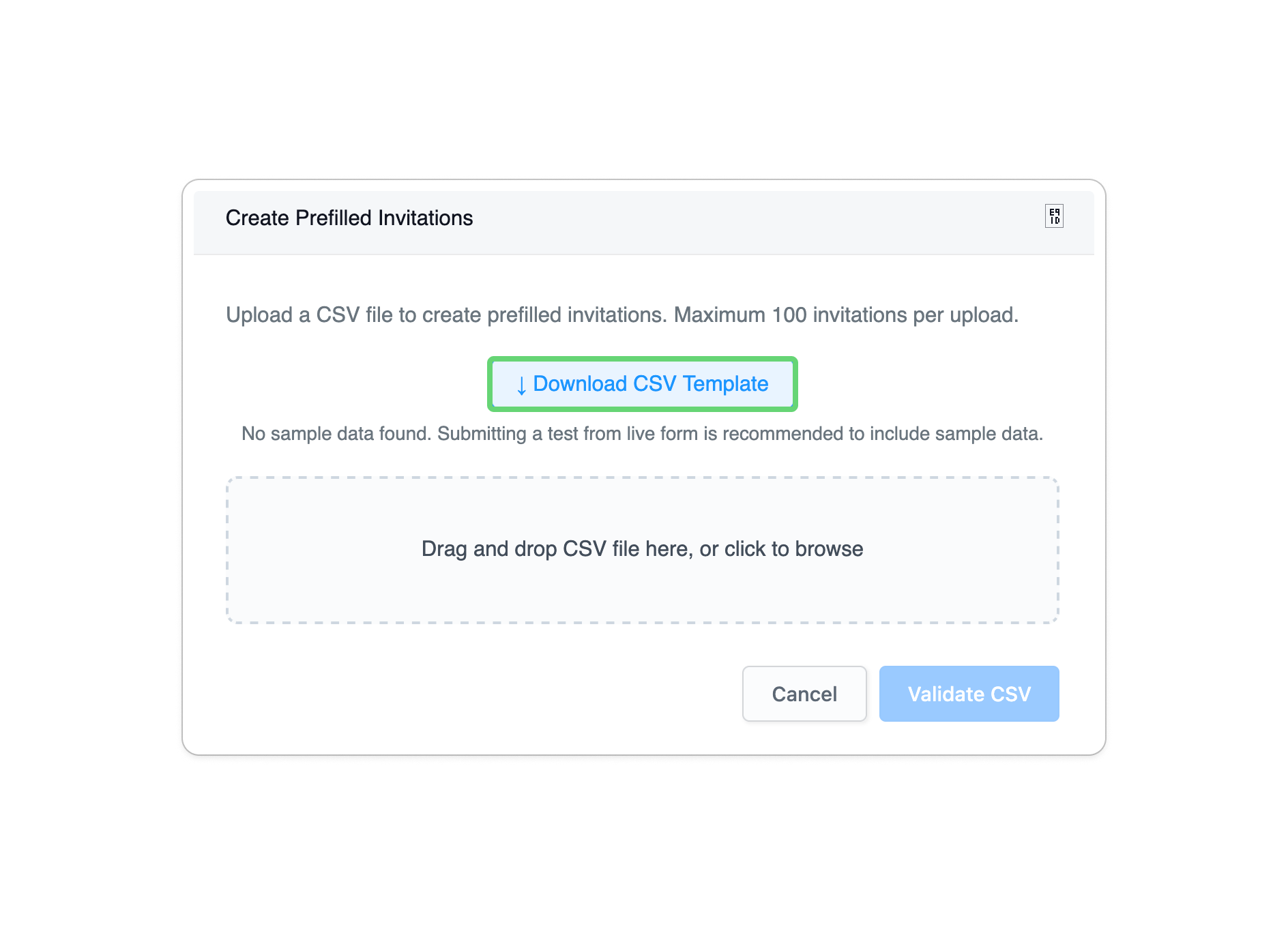 Note
NoteIf the form has a live test submission, the template can use it as sample data; otherwise, it displays No sample data found.
-
Add each recipient’s email address and pre-filled values to a separate row. Save the file as a UTF-8 CSV without changing the generated Field ID headings.
-
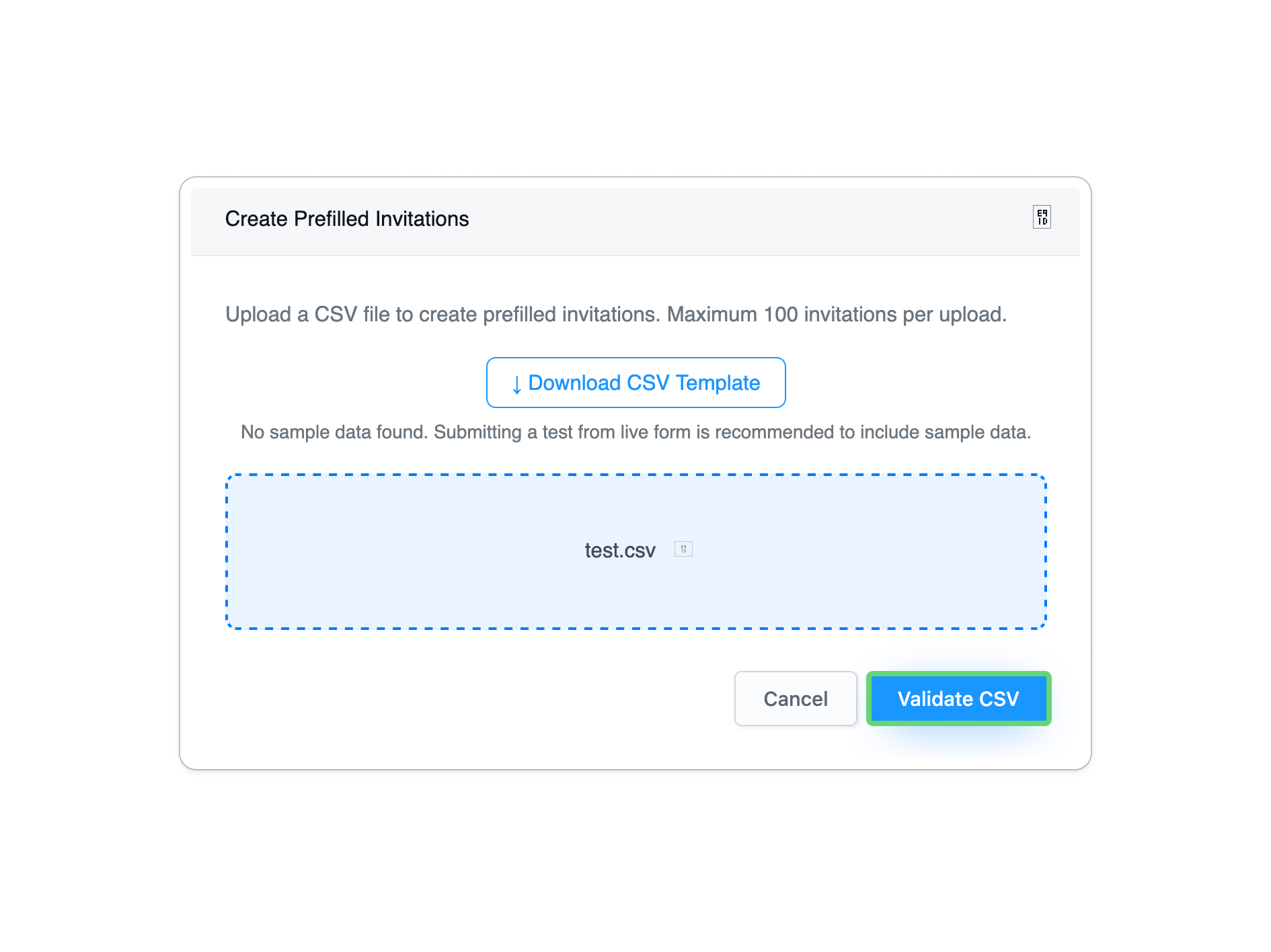
Upload the completed file, then select Validate CSV.
-
Review the validation result. If successful, PlatoForms displays CSV is valid! Found [N] invitation(s), each with [N] field(s). Select Create [N] Invitations to continue, or Back to correct the CSV.
-
After PlatoForms creates the invitations, it displays Success! Created [N] prefilled invitation(s). Select Close to return to the Invitations panel and review the new invitations before sending them.
If values from a column do not appear, confirm that the target is a fillable field rather than static text. In the form editor, a fillable field has a dashed outline.
Before you send
- Preview or open a test invitation and verify the recipient-specific values.
- Include only the recipient data needed for the form. Hidden fields are not a substitute for access control or other protection for sensitive data.
- Send each personalized invitation only to its intended recipient, and avoid forwarding its link.
Use the Invitations panel to send or schedule the invitation.
Related features
| Option | Description |
|---|---|
| Initial value | Give a Text Input field the same starting value whenever the form loads. It is not recipient-specific invitation data. |
| Save for later | Let a respondent save their own progress and return later. It does not prepare a new personalized invitation. |
| Create an invitation | Configure recipients, email content, access settings, and delivery for the invitation. |