


From endless clipboards to smart, compliant workflows — the evolution of medical forms is redefining how healthcare connects with patients.
1. The clipboard problem
Walk into almost any clinic, and the first thing you see isn’t the doctor — it’s a clipboard.
A pen. A stack of forms. A sigh.
A 2024 Harvard Health article summed it up perfectly: patients are still “jotting down medical histories for the umpteenth time”, even when hospitals already have digital records.
Why? Because systems don’t talk to each other. EMRs exist, but interoperability doesn’t.
The result is a digital paradox: we’ve modernized storage, not experience.
That’s the old idea of “going paperless” — converting paper into pixels.
The new era is different. It’s about making data move intelligently, not just electronically.
2. From paperwork to understanding
Forms used to be static — they collected information but didn’t help interpret it.
Now, digital form systems actively support healthcare teams by combining automation, adaptability, and empathy.
Three technologies are leading this shift:
- AI recognition — turns static PDFs into structured, fillable digital forms in seconds.
- Conversational experiences — replace long, overwhelming medical forms with a guided, one-question-at-a-time flow.
- Automated workflows — route every submission, approval, and signature without manual follow-up.
This isn’t just about speed or efficiency — it’s about understanding.
Modern medical forms don’t just collect data — they help providers understand the person behind it.
3. AI recognition: reading between the lines
Traditional digitization meant dragging 200 text boxes over a scanned PDF.
AI field recognition has changed that completely.
It now detects labels, matches fields, and even groups related information like current medications or allergies automatically.
Instead of spending 45 minutes mapping each field, healthcare teams can finish in minutes — and spend more time on patient care.

But the real win isn’t speed. It’s data consistency.
When every intake form follows the same logic, the data becomes reliable, searchable, and ready to support automation — from reporting to follow-up care.
In other words, the system finally starts thinking with you, not working against you.
4. Conversational forms: empathy by design
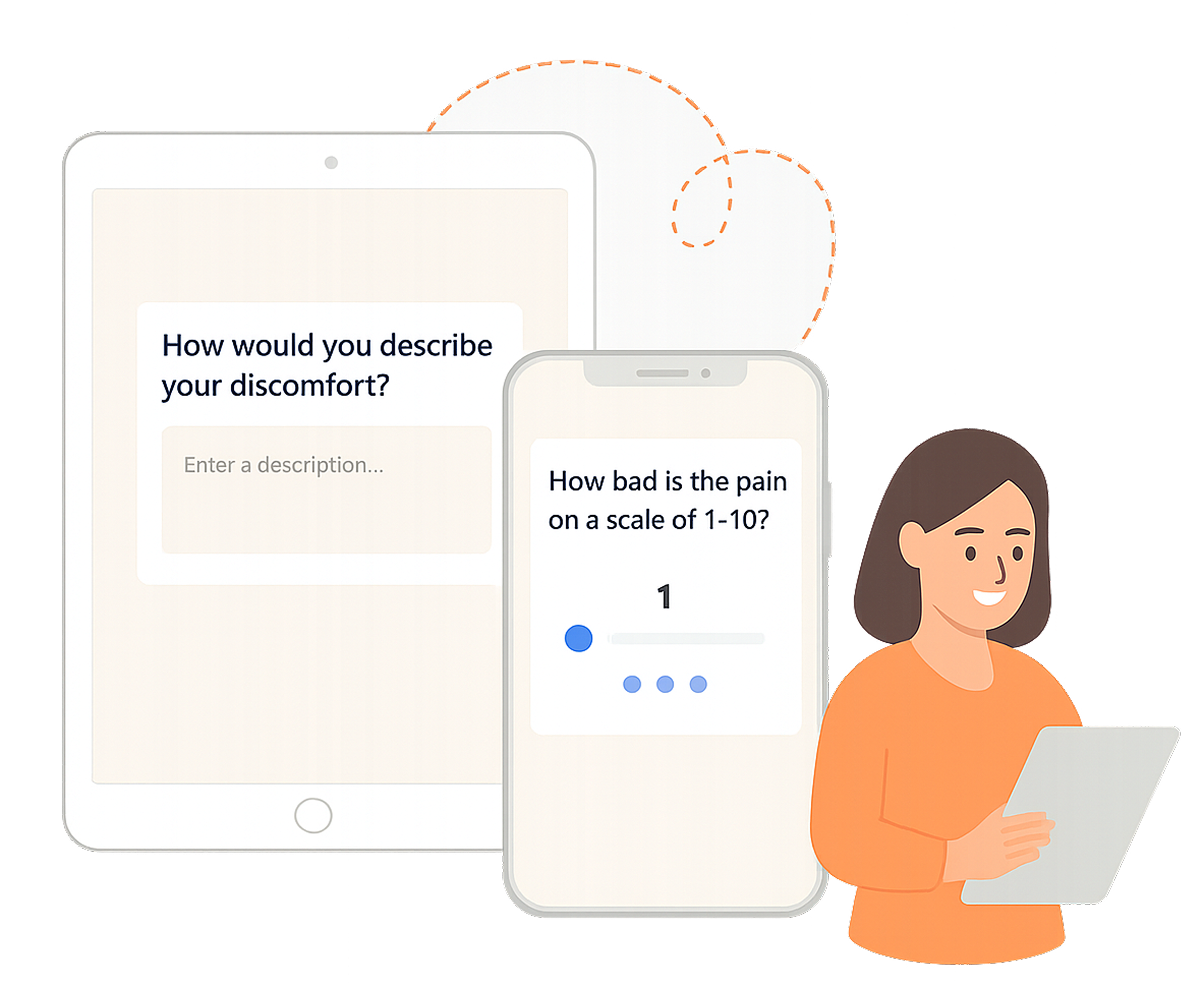
When you’re unwell, filling out another 12-page intake form is the last thing you want.
Conversational forms fix that by transforming complex paperwork into simple, natural interactions.
Instead of scrolling through hundreds of questions, patients see one at a time:
“Do you have any medication allergies?”
“Are you currently taking any prescription drugs?”
Each answer shapes the next step. The tone is calm, intuitive, and human — not bureaucratic.
This isn’t just good UX. It’s behavioral design that improves both accuracy and comfort.
Completion rates rise, errors drop, and staff gain clearer, more actionable data.
That’s what happens when empathy meets interface.
5. Templates: standardization meets personalization
Every clinic has its version of the perfect patient form.
Templates capture that hard-earned knowledge — from consent layouts to insurance updates — and make it reusable.
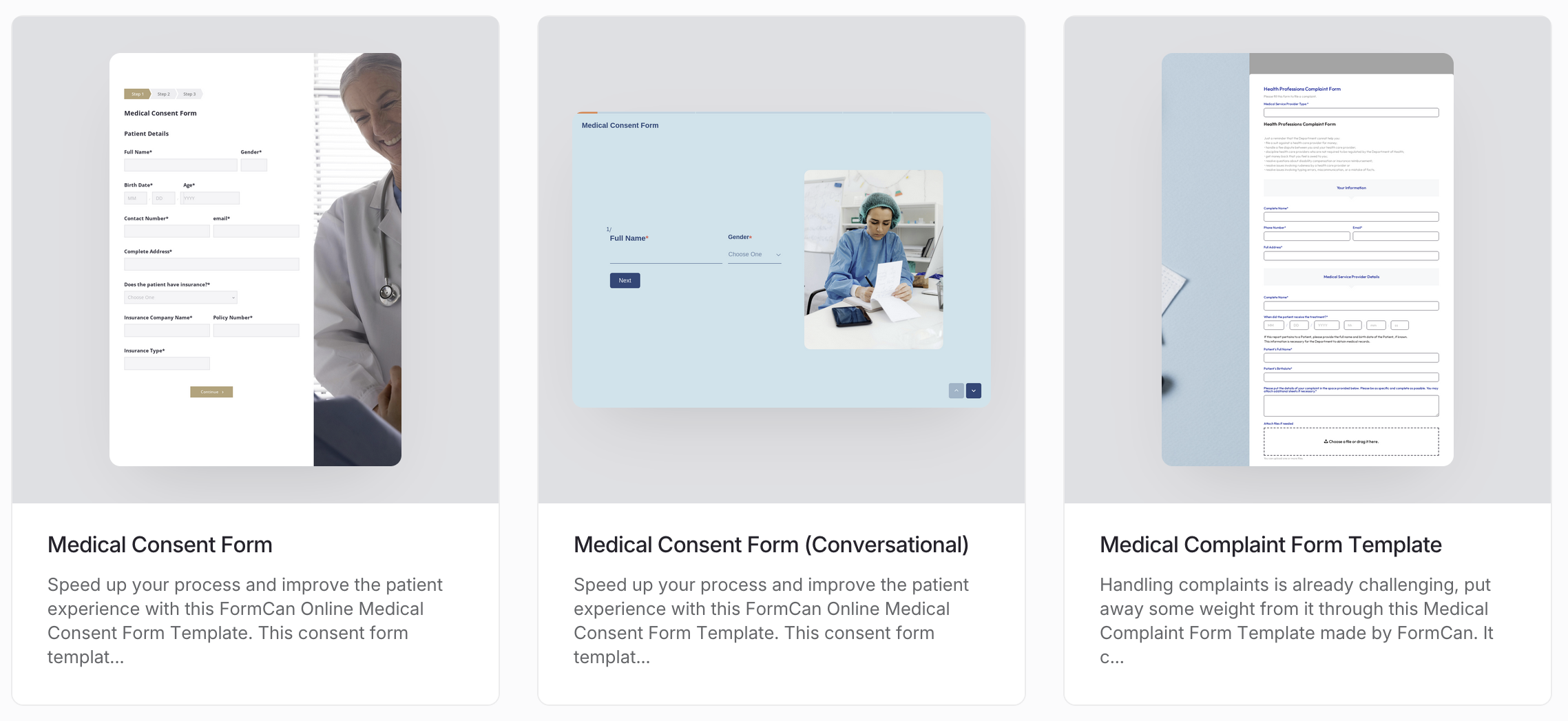
With pre-built, editable form templates, healthcare teams can skip repetitive setup work while maintaining brand consistency and compliance.
Templates save time, but they also ensure every department speaks the same digital language.
In healthcare, consistency isn’t just convenience — it’s safety.
6. Real compliance vs. checkbox compliance
Many software vendors claimed to be “HIPAA-compliant” — as long as users configured settings correctly, disabled AI, and avoided certain integrations.
That kind of conditional compliance places responsibility on the user, not the system.
True compliance should be built in, not bolted on.
A genuinely secure form platform includes:
- End-to-end encryption for all data.
- Audit logs that track every access and edit.
- Configurable data retention (even instant deletion after export).
- Verifiable signature certificates with timestamps and IP tracking.
- Secure AI models that don’t share data externally.
That’s what HIPAA-ready by design really means — a platform that protects patient information automatically, not optionally.
7. The new goal: connected empathy
The future of medical forms isn’t about prettier PDFs.
It’s about connected empathy — systems that combine automation, security, and understanding.
AI handles recognition.
Logic adapts in real time.
Workflows ensure every approval and signature happens smoothly.
And all of it runs securely, by default.
When forms evolve from data collection to care connection, healthcare stops feeling transactional — and starts feeling humane again.
✳️ In summary
Digital transformation in healthcare isn’t just about efficiency — it’s about trust.
Every checkbox, every field, every signature represents a moment of confidence between a patient and their provider.
The next generation of medical forms won’t just save time.
They’ll save effort, clarity, and — ultimately — empathy.
The shift is already underway.
With AI recognition, conversational workflows, and HIPAA-ready automation, the future of healthcare forms isn’t distant.
It’s already in the waiting room — replacing clipboards, one smart form at a time.
Further Reading
- Harvard Health Publishing (2024): What You Need to Know About Medical Forms
- PlatoForms Documentation: HIPAA Compliance and Data Security


